Boycott Israel
Boycott aims to persuade a company to abandon decisions deemed incorrect. When citizens choose to join a boycott, the primary goal is to cause sufficient economic losses to push the company to change its behavior.
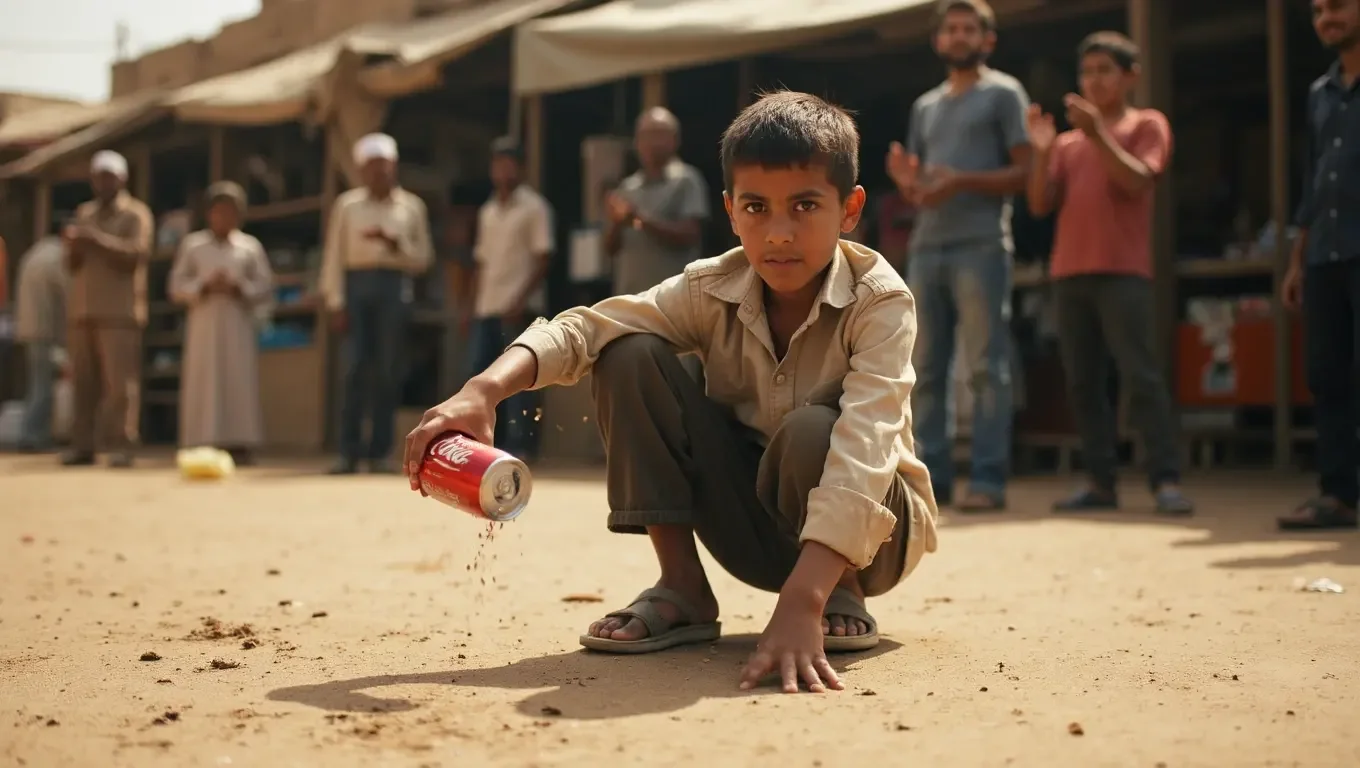
Let's talk about boycott. What is boycott?
To introduce the topic, we'll get help from Wikipedia, on whose dedicated page (https://en.wikipedia.org/wiki/Boycott) we find the history of the term's origin:
“The term boycott derives from the name of the English captain Charles Cunningham Boycott (1832-1897), a 19th-century land agent in Ireland. As an agent for the Earl of Erne, a wealthy landowner in County Mayo, he did not shy away from harassing his tenant farmers. Thus, the Irish Land League (an organization that supported the demands of farm laborers and had started a campaign for better working conditions for farmers, which Boycott had tried to oppose) adopted a non-violent action in 1880; a campaign of isolation and non-cooperation was launched against Boycott: his neighbors stopped talking to him, no one sat near him in church or spoke to him, he was no longer served in shops, nor could he hire laborers for the harvest on the estates he managed. The Earl's lands began to dry up, and Boycott was fired.”
This was the first example of a boycott in the world, in this case directed at a person. From there, expanding the concept, this type of action began to have an economic value, particularly affecting companies; the primary goal is to convince a company not to continue with choices deemed wrong, and it is implemented by publicly asking not to buy the company's products. This request for "boycott," if accepted by citizens, aims to cause sufficient economic losses to induce the company to change its behavior.
Sometimes, in addition to economic loss, a specific entity is also targeted by discrediting it in the eyes of its customers.
Furthermore, we must remember that the reasons for a boycott can be various: product quality, environmental exploitation, inhumane working conditions, human rights violations, but there can also be political reasons.
Much more important and difficult boycotts are those directed at nation-states. And it is understandable. It happened in past years, against apartheid South Africa, and has been happening for about 20 years, internationally, against Israel. The reasons that have driven so many citizens around the world to this action are diverse, but all attributable to Israeli actions against Palestinians.
How and when did the boycott against Israel start?
This is what is stated in the presentation of BDS (https://bdsmovement.net/what-bds), the movement from which it started:
"Boycott, Divestment, Sanctions (BDS) is a Palestinian-led movement for freedom, justice and equality. BDS upholds the simple principle that Palestinians are entitled to the same rights as the rest of humanity.
Israel is occupying and colonizing Palestinian land, discriminating against Palestinian citizens of Israel and denying Palestinian refugees the right to return to their homes. Inspired by the South African anti-apartheid movement, BDS calls for action to pressure Israel to comply with international law.
BDS is now a vibrant global movement made up of trade unions, academic associations, churches and grassroots movements around the world. Since its launch in 2005, BDS has had a significant impact and is effectively challenging international support for Israeli apartheid and settler colonialism."
The boycott against Israel is therefore carried out on multiple levels. From an economic point of view, the targets are companies, very often international, that support apartheid, occupation, and the genocide of Gazans.
Then there is another type of action, the academic and cultural boycott (https://bdsmovement.net/academic-boycott).
The Palestinian Campaign for the Academic and Cultural Boycott of Israel (PACBI) launched its historic appeal in 2004. This type of boycott is the one most attacked by public opinion, as many are of the opinion that art and culture (also sports:
https://bdsmovement.net/ban-apartheid-israel-from-sports) should be kept separate from wars and conflicts between governments.
PACBI argues that Israeli academic institutions and the vast majority of Israeli intellectuals and academics have contributed to maintaining, defending, or justifying the governments' acts of force, or have simply been complicit through their silence. Furthermore, Israel is accused of using culture as a form of propaganda to "wash" its misdeeds. Already in 2009, an Israeli official announced the plan to send writers, theater companies, and exhibitions by well-known artists abroad to "show the most beautiful face of Israel."
Another example of this shameful practice, on the part of Israeli governments, is the contract that artists and cultural operators must sign with the Ministry of Foreign Affairs. In fact, when they request state funding to cover the cost of their work or simply for participation in international events, they are obliged to contribute to the official propaganda efforts. The contract states that those who are funded have the duty "to promote the political interests of the State of Israel through culture and art, including contributing to creating a positive image for Israel."
And now we come to the large international companies that BDS considers primary targets. They are of various types, almost always Western, and range from digital giants to those involved in food.
Which companies and products should be boycotted in Italy?
The BDS movement has defined international boycott and pressure targets against companies complicit in genocide.
However, not all companies included in the international BDS movement guide are present in Italy. So BDS Italy has defined specific boycott targets. The boycott includes many international companies whose dealings with Israel contribute to genocide, apartheid, colonization, or illegal occupation.
Carrefour
https://bdsitalia.org/index.php/campagne/carrefour
TEVA
Teva is an Israeli pharmaceutical company and one of the largest manufacturers of generic drugs in the world.
https://bdsitalia.org/index.php/campagne/teva-no-grazie
Hewlett-Packard (HP)
HP provides crucial technological and logistical support that enables war crimes and crimes against humanity in Palestine.
https://bdsmovement.net/BoycottHP-GazaGenocide-Update
DELL
Dell Technologies provides servers, maintenance services, and equipment related to the Israeli armed forces.
Furthermore, one month after the start of the Israeli genocide in Gaza, founder and CEO Michael Dell donated $350 million worth of shares to Israel.
Intel
For decades, Intel has been the largest international investor in apartheid Israel. In December 2023, during the genocide by Israel in Gaza, Intel announced it would invest $25 billion.
https://www.reuters.com/technology/intel-get-32-billion-government-grant-new-25-billion-israel-chip-plant-2023-12-26/
Microsoft
Microsoft is perhaps the tech company most complicit in Israel's illegal occupation, apartheid regime, and ongoing genocide against 2.3 million Palestinians in Gaza. Its technologies are integrated into the prison service, police, universities, and schools, including settlements. Microsoft provides the Israeli army with Azure cloud and AI services that are crucial to powering and accelerating Israel's genocidal war.
Microsoft workers and former workers themselves have launched No Azure for Apartheid
Learn more: https://bdsmovement.net/microsoft
SIEMENS
Siemens (Germany) is the main contractor for the Euro-Asia Interconnector, an Israel-EU submarine electricity cable designed to connect Israel's illegal settlements in the occupied Palestinian territories to Europe.
Amazon and Google
Amazon and Google have long been implicated in Israel's system of oppression and apartheid and the ongoing genocide in Gaza.
Project Nimbus, the joint $1.22 billion contract between Google and Amazon signed in 2021, provides cloud computing infrastructure, artificial intelligence, and other technological services to the Israeli government and the Israeli army. Nimbus offers a platform for the Israeli army that manages deadly artificial intelligence programs crucial to the genocide in Gaza.
Amazon and Google workers have also taken a stand: https://www.notechforapartheid.com/
BDS therefore asks to seek alternatives to Amazon delivery, regardless of what you buy.
Booking
Booking.com supports and benefits from the illegal occupation of the West Bank, including East Jerusalem, by offering services such as vacation rentals and hotels in illegal Israeli settlements built on stolen Palestinian land.
https://bdsmovement.net/bookingcom-stop-profiting-war-crimes
Airbnb and Expedia
Like Booking, they offer rentals in illegal Israeli settlements built on occupied Palestinian land.
AXA
The insurance giant AXA (France) holds millions of dollars in shares and bonds in eleven companies that are arming Israel during the genocide against Palestinians in Gaza, including Boeing and General Dynamics.
REEBOK
In early 2025, Reebok signed a sponsorship contract with the Israel Football Association (IFA), which includes teams born in illegal Israeli settlements on occupied Palestinian land. Palestinians are calling on Reebok to immediately withdraw from the contract, or face a global boycott campaign just as Adidas, PUMA, and Erreà faced before them.
BNP Paribas
The UN has identified 97 companies with operations in illegal Israeli settlements, and among these, 30 receive investments from BNP. Between 2020 and 2023, DBIO (Don't Buy Into Occupation) showed that BNP Paribas granted $22.2 billion in loans and underwriting to companies involved in the illegal settlement of Palestine.
RE/MAX
RE/MAX (USA) markets and sells properties in illegal Israeli settlements built on stolen Palestinian land, thus enabling Israeli colonization of the occupied West Bank, including East Jerusalem.
McDonald’s - Coca Cola - Burger King
No need to explain who they are.
ZARA
Inditex owns ZARA, Massimo Dutti, Pull & Bear, Bershka, Oysho, Stradivarius, and ZARA Home. While all operate in apartheid Israel, ZARA is Inditex's most important brand, and is therefore the primary target of the strategic BDS boycott campaign.
These are the main companies to boycott and keep under pressure. BDS adopts a boycott policy it calls "targeted" to make everyone's commitment more effective. The idea is to strategically focus on a relatively small number of carefully selected companies and products for maximum impact. It aims to target companies that play a clear and direct role in Israel's crimes against Palestinians, as well as in violating the rights of other peoples/communities, and where there is real potential to win. This is how the BDS movement has successfully forced companies like G4S, Veolia, Orange, Puma, and Pillsbury, among others, to end their complicity with Israel.
Below, we link the section of the Palestinian BDS Movement website where you can read about the impact that the international boycott has had on the Israeli economy and also the solidarity and commitment of organizations, institutions, churches, trade unions, local and national governments regarding the situation in Gaza and throughout Palestine. Obviously, with the substantial help of thousands and thousands of citizens around the world, who will still have to commit and indeed grow support for these movements, until the liberation of Palestine.
https://bdsmovement.net/our-impact
But the products to boycott are not over. Those considered by BDS are products of large international companies, but it is very important to also boycott agri-food products from Israel and Italian companies complicit in this trade, because, as Italians, we do not want to be co-responsible for a genocide. But we will talk about this on another occasion. For now, we are done.
Thank you for reading this post and happy boycotting everyone.